
Views: 0 Author: Zhongjing® Furniture Publish Time: 2026-01-13 Origin: Zhongjing® Furniture


When the host asks, "Booth or table?" most of us have a quick answer. But what if the best seat wasn't against a wall? The real workhorse of restaurant design is often sitting right in the middle of the floor, and there's a clever strategy behind it that affects your entire dining experience, from the conversation you have to the chaos you don't hear.
At a freestanding table in a busy aisle, it’s easy to feel like you’re on display. A double-sided booth, however, creates a powerful sense of privacy. Its high, shared back acts as a visual shield, blocking out the room's motion and creating a personal ‘bubble’ for your party. For anyone seeking private restaurant seating, this simple design choice makes the difference between feeling exposed and feeling intimately secluded.
That same upholstered back also does something remarkable: it quiets the room. In practice, the soft fabric acts like a mini acoustic panel, soaking up ambient chatter instead of letting it bounce around. This is one of the great benefits of booth seating, as it makes conversation easier and the entire restaurant feel less chaotic. Next time you're out, notice how the room’s buzz seems to soften the moment you slide into a booth.
At first glance, you might assume a double-sided booth is just two regular booths pushed together. The reality, however, is a clever bit of engineering. Instead of having two separate frames and a useless gap between them, a true double-sided booth is a single piece of furniture built around one shared back. This design isn't just for looks; it's a powerful tool for maximizing a restaurant's most valuable asset: its floor space.
This single-unit design is the key to a restaurant owner’s favorite magic trick: creating seating out of thin air. By eliminating that wasted back-to-back gap and the thickness of a second structural frame, each double booth saves several critical inches. While that might not sound like much, it becomes a massive advantage when repeated down a line of four or five booths.
Across an entire restaurant floor, those saved inches can add up to enough room for a whole extra table or a wider, more comfortable aisle. For diners, the benefit is direct and simple: more tables mean more people can be seated, which can lead to a shorter wait for you on a busy Friday night. But this space-saving design does more than just fit more people; it also plays a crucial role in how everyone moves around the room.
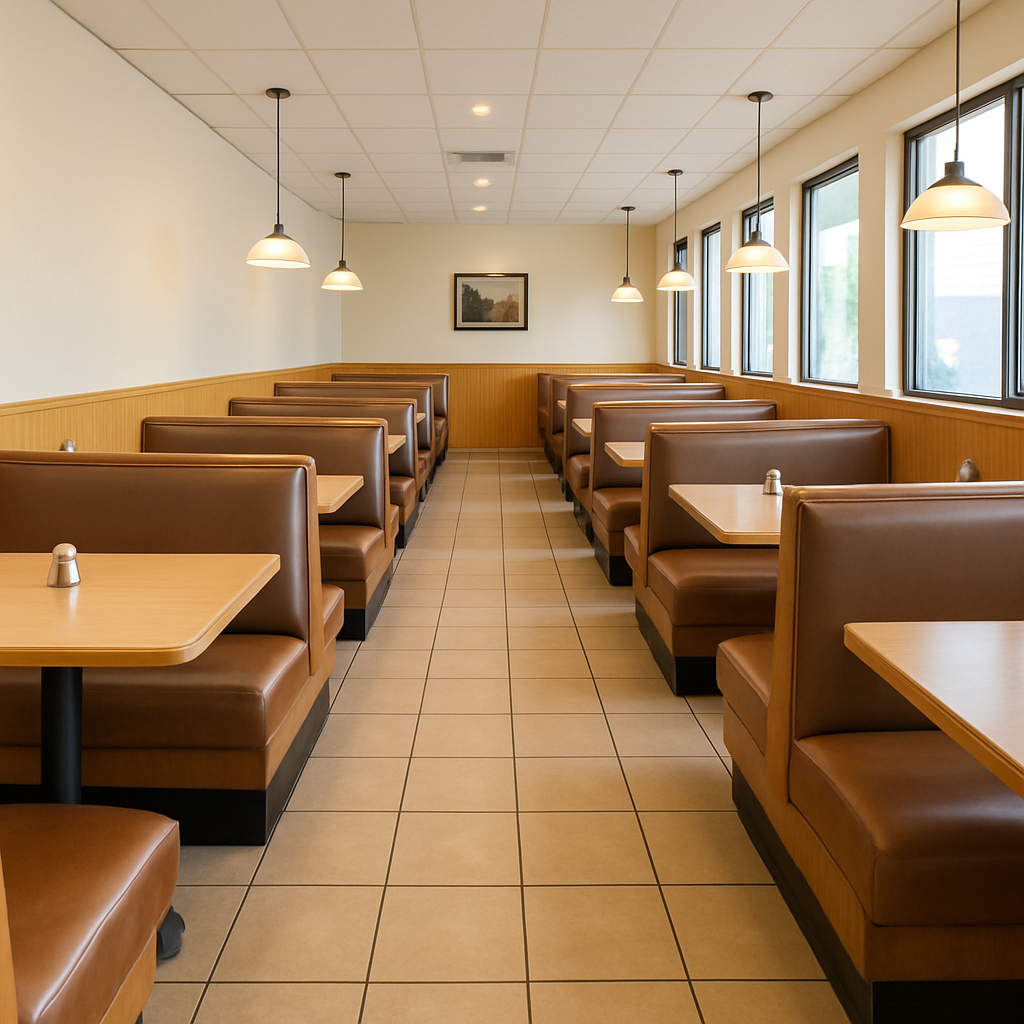
That extra space gained from a double booth's design isn't just for squeezing in another four-top. It’s also used to direct the constant, swirling motion of a busy restaurant. Think of a long row of double-sided booths as creating a clear, protected channel—an invisible highway for staff carrying hot plates and for diners heading to the restroom. This restaurant seating arrangement guide prevents that chaotic feeling of servers and guests constantly weaving through a maze of tables, making the whole experience feel smoother and safer for everyone.
Beyond directing foot traffic, these booths are masters of dividing a large, open room without building walls. A cavernous dining hall can feel loud and impersonal, more like a cafeteria than an intimate restaurant. By placing rows of double-sided booths, designers break up the space, creating smaller, more sheltered “zones.” Each zone feels like its own cozy corner, giving diners a sense of privacy and separation even when the restaurant is packed. This is how a restaurant floor plan with booths can make a room for 150 people feel as intimate as a room for 50.
So, the placement of these booths is a masterful balancing act between efficiency and atmosphere—guiding how you move while shaping how you feel. The goal is to create a space that feels both lively and comfortable, not crowded and chaotic. But the strategy doesn’t stop with the layout. The specific style of a booth can completely change a room's personality, which is why the booths in a classic diner look so different from those in a modern bistro.
Think about the quintessential American diner. The seating is almost always a bright, glossy vinyl, maybe in a cheerful red or turquoise. That shiny surface isn’t just for looks; it’s a signal. The classic diner style booth seating is durable and incredibly fast to wipe down, perfect for a bustling spot with high turnover. The material itself contributes to a lively, energetic, and casual atmosphere.
Now, picture a cozy, upscale bistro where you’d settle in for a long dinner. Here, you’re more likely to find booths covered in soft, textured fabrics or rich faux leathers. These materials do more than feel luxurious—they absorb sound, softening the room’s ambient chatter and making conversation easier. The choice of upholstery is a deliberate cue, telling you to relax, stay a while, and enjoy a more intimate experience.
Beyond the material, the height of a booth’s backrest is another tool designers use to shape your experience. Lower backs, common in casual eateries, keep the room feeling open and social. But when a restaurant wants to create private little worlds for its diners, they opt for high-backed booths. These partitions create a cocoon-like effect, visually and acoustically separating you from the surrounding tables.
Finally, you might notice seating that looks less like a standalone booth and more like a long, continuous bench built against a wall. This is often called a custom restaurant banquette design. It creates a sleek, seamless look popular in modern spaces. Whether it’s shiny vinyl or plush fabric, however, every material choice comes with a hidden practical challenge for the restaurant.
That glossy vinyl on a classic diner booth isn’t just for retro flair; it’s a deliberate defense against the daily chaos of a busy restaurant. This material is typically commercial-grade vinyl, a super-durable version engineered to withstand thousands of spills and scrubs without fading or cracking. This choice is key to how to clean vinyl booth seating in under a minute, ensuring your table is ready quickly.
Beyond the tough surface, however, lies a hidden feature designed to solve one of dining’s biggest annoyances: the gap between the seat and the back. Many pieces of commercial grade banquette seating include a secret weapon called a crumb strip. This is a flexible or removable flap that covers that black hole where fries and crayons disappear. For staff, it means they can simply lift the strip and sweep everything out in seconds.
These features reveal a core principle of restaurant furniture maintenance: speed is everything. The combination of durable vinyl and a clever crumb strip transforms a deep-cleaning headache into a simple wipe-and-sweep. It’s one of the many thoughtful details that help a restaurant run smoothly, hidden in plain sight.
You’ve now pulled back the curtain on a piece of design you’ve seen a hundred times but perhaps never truly noticed. Where you once saw just a cozy place to sit, you can now see the clever balancing act at play. The double-sided booth is more than furniture; it's a quiet agreement between diner and owner. You get a comfortable, private experience, while the restaurant gains an efficient floor plan that serves more guests and keeps the energy flowing. The shared benefits of booth seating are a true win-win.
Your new knowledge transforms you from a passive customer into an informed observer. The next time you’re dining out, use this simple mental checklist to see the design in action—it's your own mini restaurant seating arrangement guide.
Pathways: Notice how the restaurant back to back seating layout creates clear, efficient walkways for servers, separating traffic from diners.
Materials: Does the upholstery (like durable vinyl or plush fabric) match the restaurant's vibe and price point?
Privacy Bubble: Sit in a booth and then a table in the open. Can you feel the difference in noise and the sense of personal space?
You've unlocked a new layer of appreciation for the world around you. A simple booth is no longer just a booth; it’s a sign of thoughtful design that balances comfort with commerce. You now see the hidden craft in everyday spaces, proving the best experiences are often the ones engineered so well you never had to notice them. Until now.
Discover how Zhongjing® Furniture elevates every seat in your restaurant—from ergonomic dining chairs to space-saving restaurant booths. Explore our end-to-end Solutions and bespoke Customization services, and design a seating experience that truly fits your brand.
For tailored consultations, contact us at felix@nazj.com .


