
Views: 0 Author: Site Editor Publish Time: 2026-01-16 Origin: Site


Struggling to fit more customers into your floor plan without making it feel cramped? The secret isn't smaller tables—it's a specific type of seating you’ve seen in every successful diner. This space-saving workhorse is called a double row booth, the professional term for what many people know as back-to-back booths, and it's a staple of smart restaurant design for a reason.
So, what are back-to-back booths, exactly? Don't picture two separate booths pushed together. Instead, imagine two benches fused into one solid piece of furniture, sharing a single, common backrest panel. This unified construction is the key to their magic. By eliminating the gap and redundant framing you'd have between two single-sided booths, this design saves precious floor space and allows the seating to “float” gracefully in the middle of a room, maximizing your capacity.
A clear, well-lit photo of a double row (back-to-back) booth in the middle of a clean, modern fast-casual restaurant. The shared central backrest panel is clearly visible. Image focus is on the single, unified construction
The biggest draw for a double row booth is its slim footprint—the total depth it occupies on your floor. Compared to placing two single booths back-to-back with a partition wall, a double row unit saves you a significant 12 to 18 inches of depth. This is possible because both sides share a single, common back, eliminating the wasted space of two separate booth backs and the divider itself.
So, what does an extra foot of space really get you? Over a row of five booths, you've just reclaimed enough floor area for another two-person table, instantly boosting your seating capacity. Alternatively, that space can create wider, more comfortable aisles. This makes it far easier for staff to serve and for guests—especially families with strollers or patrons needing more room—to navigate your restaurant comfortably.
This efficiency does more than just make your layout feel less cramped; it directly improves a key business metric: the number of patrons per square foot. By fitting more seating into the same area without sacrificing comfort, you increase your restaurant's total capacity. More potential customers, especially during peak hours, is the most direct path to increasing revenue. But the advantages aren't just about maximizing your floor plan.
Beyond the numbers, double row booths fundamentally change the feel of your dining room by creating personal zones for your guests. The high, shared back acts as a divider, giving each party a sense of privacy. This “cocoon effect” makes conversations feel more intimate and reduces distractions from neighboring tables, which often encourages guests to relax, stay longer, and potentially order more.
Upholstered booths also serve as a secret weapon against noise. In a busy restaurant, hard surfaces like wood floors and bare walls can cause sound to bounce around, creating a loud, chaotic environment. The soft, padded surfaces of a booth row absorb sound, much like curtains or carpet. This acoustic benefit helps dampen the clatter of dishes and the hum of conversations, leading to a more pleasant and comfortable atmosphere for everyone.
Finally, these seating configurations can dramatically streamline your service. Arranging booths in neat, predictable rows creates clear and unobstructed pathways for your staff. Instead of navigating a scattered maze of tables and chairs, servers can move quickly and efficiently from the kitchen to the customer. This simple change in restaurant seating layout can improve service speed and reduce the risk of spills and accidents during peak hours.
While double row booths offer fantastic benefits, they aren’t a universal solution. The right choice depends entirely on your specific space and service style. A successful restaurant floor plan with booths considers not just capacity, but also the brand's identity and operational needs. What works for a bustling lunch spot might hinder a quiet bistro.
So, how do you know if they are a match for your vision? This quick checklist, inspired by common diner style seating ideas and modern layouts, can help you decide.
Best For:
Long, narrow floor plans where rows maximize the space.
High-volume establishments (diners, pizzerias, fast-casual).
Creating defined, cozy zones within a large, open room.
Consider Alternatives If:
You need maximum layout flexibility to host large, unpredictable parties.
Your concept is formal fine dining, which often favors more open arrangements.
The biggest trade-off in the booth seating vs. tables and chairs debate is flexibility. Because booths are large, fixed units, you can’t simply push two together to accommodate a last-minute party of eight. You gain incredible efficiency and privacy, but you lose the ability to rearrange your floor on the fly. If you’ve decided the benefits outweigh this limitation, your next move is to grab a tape measure.
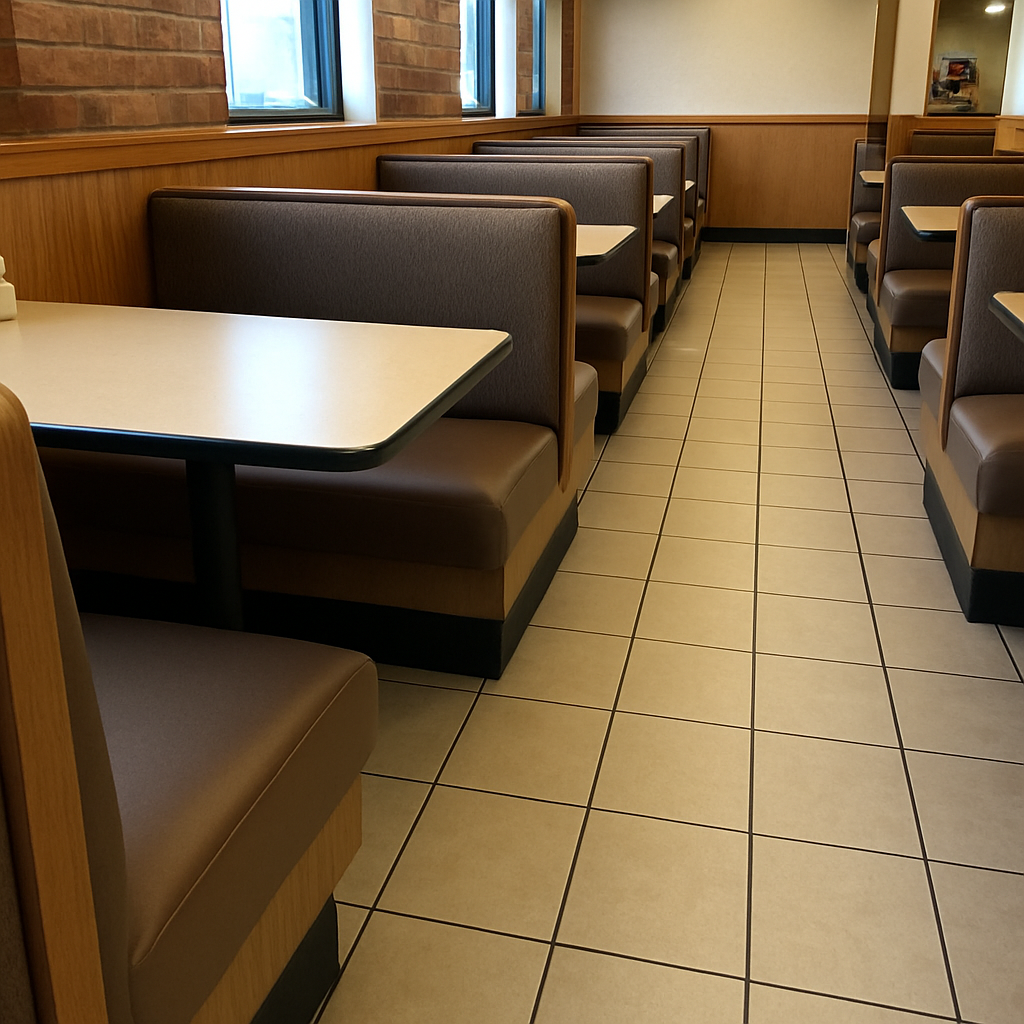
You don’t need blueprints to get a quick estimate of your capacity. The key is understanding the total seating footprint—the full width your double row booth setup will occupy, from one diner's back to the other. A solid rule of thumb for how much space you need for restaurant booth seating is about 6.5 feet (78 inches). This measurement conveniently covers both booth benches and the table between them, giving you the width for one complete row.
With that width established, you can figure out your row's length. Booths typically come in standard sizes, most commonly 48 inches (a classic two-seater), 60 inches (a popular four-seater), and 72 inches (for larger parties). To see what your room can handle, just measure the total length you want the row to occupy. For example, fitting four of the popular 60-inch booths would require 20 feet of linear space.
In just a few minutes, you have a powerful starting point for your floor plan. Knowing you need a 6.5-foot-wide path and, for instance, 20 feet of length transforms your layout idea into a concrete number. You can confidently use this simple estimate in any restaurant booth installation guide or when talking to a furniture supplier. Now that you know they’ll fit, the next decision is what they should be made of.
A simple photo looking down a clean restaurant aisle. On one side is a row of double booths with tables. The photo clearly shows the total width taken up by the booth-table-booth setup and the adjacent walkway, giving a real-world sense of the space required

When you picture a classic booth, you’re likely thinking of vinyl—and for good reason. It’s the go-to for most restaurants because commercial-grade vinyl is specifically engineered for a life of spills and constant use. Unlike the material on a home kitchen chair, it’s designed to be wiped down hundreds of times without cracking or fading. This makes it one of the most durable commercial seating solutions, perfect for high-turnover spots like family pizzerias or busy diners where speed and cleanliness are top priorities.
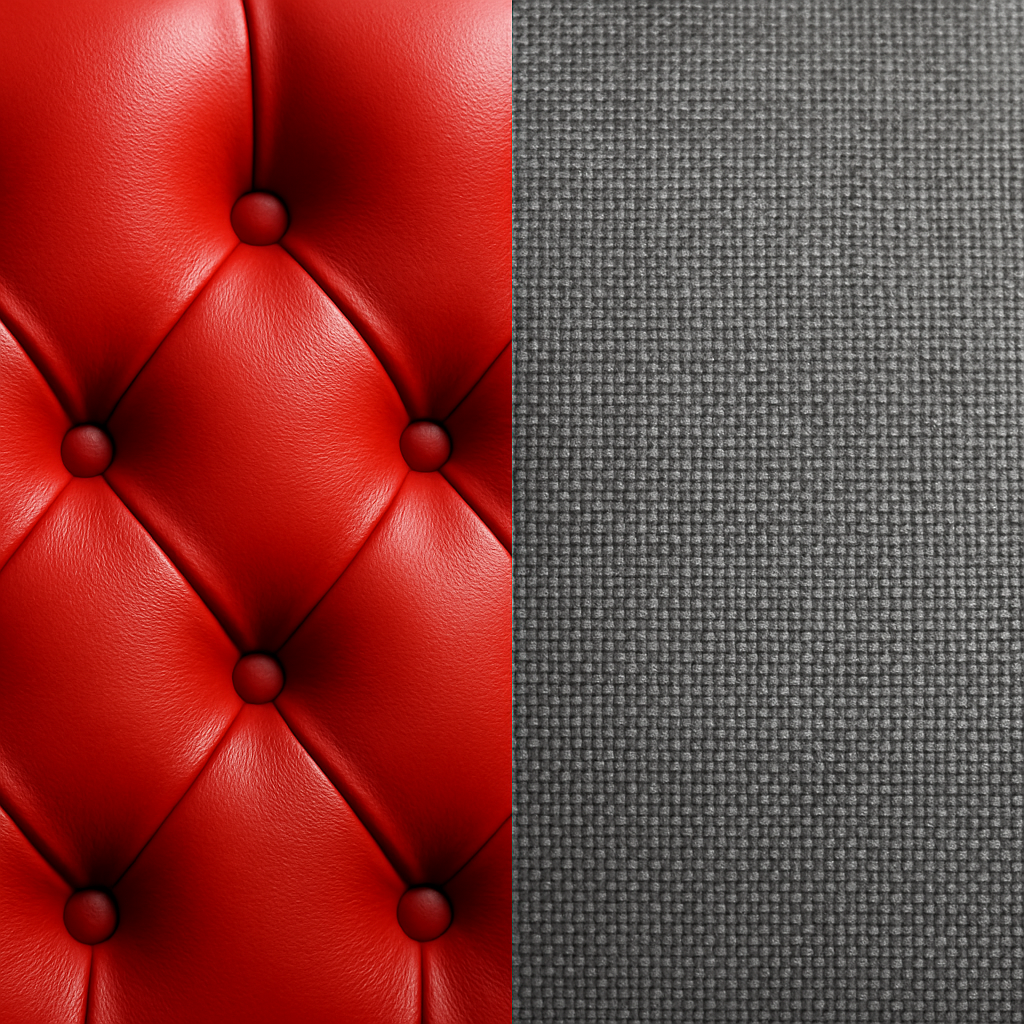
But what if you're aiming for a softer, quieter atmosphere? This is where fabric enters the picture. As you can see in the side-by-side comparison, modern commercial fabrics offer rich textures that can make a space feel more upscale and inviting. Fabric also has a hidden benefit: it absorbs sound, helping to reduce the clatter and echo in a busy room. While they require more specialized cleaning, treated fabrics are excellent among commercial booth upholstery options for cozy coffee shops or intimate dining areas where comfort and ambiance are paramount.
Whether you lean toward easy-clean vinyl or cozy fabric, one number tells you how long your investment will truly last: the double rub count. It sounds technical, but the idea is simple. It’s a durability rating from a test that simulates the wear of someone sitting down and getting up. For a booth that will see daily traffic, you should look for a double rub count of at least 100,000. This single spec is a crucial quality indicator that affects long-term value and is a factor in custom restaurant booth pricing, ensuring your seating can handle years of happy customers.
A side-by-side comparison shot. The left half shows a close-up of a classic, wipeable red vinyl booth upholstery. The right half shows a close-up of a modern, textured gray commercial fabric upholstery. Both look durable and high-quality
Where you once saw simple back-to-back seating, you now recognize a strategic tool. You understand how these double row booths can maximize your floor plan, create a more private guest experience, and improve your restaurant’s operational flow. This knowledge elevates you from a browser to a planner, ready to make informed decisions about your commercial seating solutions.
To turn that plan into reality, you are now prepared to have a productive conversation with any vendor. With your new understanding, you can confidently get the answers you need for your project.
Questions to Ask Your Supplier:
What is the warranty on the frame and upholstery?
What is the double rub count of this material?
What is the lead time for a custom order?
Do you offer installation services and what is the cost?
Armed with this checklist, your next step is simple: measure your space, define your needs (vibe vs. durability), and begin contacting suppliers to get accurate custom restaurant booth pricing. You’re no longer just buying furniture; you are making a calculated investment in the success and capacity of your establishment.
Need a complete seating upgrade—from dining chairs to restaurant booths ? Zhongjing® Furniture provides full-chain Solutions and Customization services to align your space with your brand.
Get expert advice: felix@nazj.com .


