
Views: 0 Author: Zhongjing® Furniture Publish Time: 2025-11-09 Origin: Zhongjing® Furniture


Public institutions are integral to the functioning of society, and their dining spaces serve multiple purposes, including dining, socializing, relaxation, and even business meetings. Public institution dining furniture is not just a cold set of tables and chairs; it is the soul of the space, silently conveying the institution's culture and care for its people.
When designing such spaces, it is essential to move beyond the generic, standardized approach and embrace forward-thinking, human-centered design principles.
A successful public institution dining furniture design first achieves the perfect balance between functionality and aesthetics. While it must meet the basic requirements of efficiency, durability, and ease of cleaning, it should also serve as a visual centerpiece that elevates the space.
Flow and Inclusivity: Creating Dynamic Aesthetic Scenes
Traditional furniture designs often lean toward fixed layouts, but modern public institution dining spaces demand flexibility. Furniture designs should consider "flow," allowing users to adjust and rearrange based on different times and needs. For instance, modular tables and chairs can easily be combined for large dining areas or separated into individual units to accommodate smaller, more intimate social gatherings.
The furniture should also be designed to harmonize with various interior decor styles while maintaining its unique personality. Warm, soft colors or simple, flowing lines can create a relaxed and pleasant dining atmosphere. For example, curved seating designs not only enhance the visual softness but also provide a comforting embrace, helping users feel a sense of belonging and relaxation in a public space.
Theme and Cultural Heritage: The "Story" Within Furniture
Public institutions often have unique histories, cultures, or missions. Dining furniture design can serve as an excellent vehicle for transforming these intangible "stories" into tangible elements. Through the material, texture, color, and even intricate details, furniture can subtly integrate iconic institutional elements or local cultural features.
For instance, chairs inspired by traditional joinery structures reflect craftsmanship while evoking cultural depth. Furniture made from locally sourced wood or stone not only promotes sustainability but also infuses a regional flavor into the dining experience. These "storytelling" pieces can elevate the cultural quality of the space and strengthen users' sense of identity and belonging.
Human-Centered "Poetry": The Deep Exploration of Comfort
"People first" is at the core of any design philosophy. In public institution dining furniture, human-centered considerations should be evident in every detail. From ergonomic seating to appropriate table heights and widths, the design must account for users' diverse body types and comfort needs. For example, chair backs should support the natural curve of the spine, and seat cushions should be comfortable without being too soft. Armrests should be positioned at an ideal height for relaxation.
Table surfaces should not only be durable and easy to clean but also pleasant to the touch, avoiding cold, hard materials. For users with special needs, such as those with mobility challenges, the design should offer more accessible dining solutions. When furniture meets and exceeds the basic needs of its users, it transforms from mere objects into a "poetic" space that conveys warmth and care.
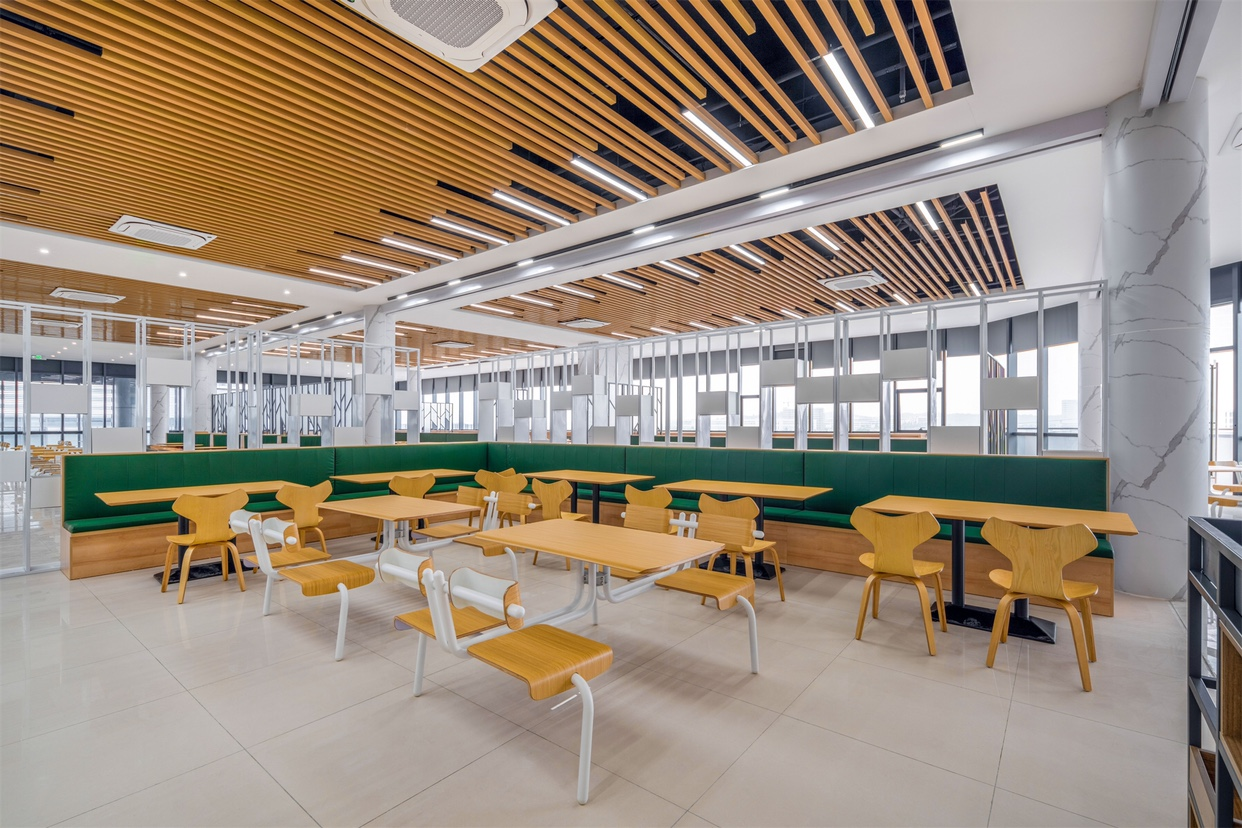
When selecting materials for public institution dining furniture, durability, sustainability, and ease of maintenance are paramount. This is not just a technical choice but an exploration of "material aesthetics."
Durability and Sustainability as the Foundation: Choosing Wood and Metal
For public institutions, durability is the top priority. The furniture must withstand frequent use. High-quality wood, such as oak or walnut, with its natural grain and excellent weight-bearing capacity, is a classic choice. Specially treated wood furniture offers even better resistance to corrosion and deformation.
Metal materials, like stainless steel and aluminum alloys, are increasingly favored for their durability, ease of cleaning, and resistance to wear. For example, stainless steel frame chairs with wood or fabric cushions offer a sturdy structure and design flexibility. In addition to durability, sustainability must be a key factor in material selection.
Opting for wood from sustainably managed forests or recyclable metals helps minimize the environmental impact of the furniture.
Ensuring Health and Environmental Safety: Low VOC Materials
As awareness of health and environmental impact grows, the choice of materials in public institutions has become more critical. Public spaces, where large groups gather, should prioritize low VOC (volatile organic compounds) materials. This includes eco-friendly boards, non-toxic paints and coatings, and adhesives.
Materials like E0 or E1 grade eco-boards help reduce indoor air pollution. Natural fibers like cotton, linen, or eco-certified synthetic fibers provide comfortable textures while ensuring air quality remains optimal.
Sensory Pleasure: Combining Texture and Quality
Beyond wood and metal, materials such as natural stones (e.g., marble, granite) and high-quality engineered stones enhance the visual appeal of dining countertops, offering a luxurious, modern, or minimalist look, while also being easy to maintain. The natural textures and colors of these materials add a unique beauty to the space.
For cushions and backs, choosing fabrics with a soft touch and good breathability, such as wool blends, linen, or specially treated tech fabrics, not only elevates comfort but also adds warmth and sophistication to the space.
In this fast-paced age, public institution dining furniture is embracing the fusion with technology, which offers more than just smart hardware—it represents an upgrade in intelligent services and humanistic care.
Modularity and Flexibility: Maximizing Space Utilization
As mentioned earlier, modular design is essential. In the future, modular, detachable furniture systems will adapt to various scenarios. Furniture with hidden folding features or movable partitions can easily accommodate large or small gatherings, maximizing space efficiency.
Integrated technology, such as wireless charging stations or built-in lighting systems, allows for seamless integration without disrupting the overall aesthetic. These tech-driven solutions improve convenience for users and elevate their experience.
Ergonomics and Health Monitoring: Moving from "Seating" to "Health"
Some advanced chairs may include sensors to monitor posture and provide feedback to users, helping them maintain proper sitting positions. Temperature-controlled features could adjust according to user preference, offering a personalized and comfortable experience. These emerging technologies suggest that public institution dining furniture will evolve from purely functional objects to holistic health management tools.
Public institution dining furniture is more than just functional—it is a tool for storytelling, cultural expression, and creating a space that nurtures both the body and the soul. The choices we make in design, materials, and integration of technology play a pivotal role in shaping how users interact with the space and with each other. Solution Customization and innovative design help these spaces transcend basic functionality, becoming dynamic and inclusive environments where people feel connected to the space and to each other.
For inquiries, please contact us at felix@nazj.com.


