
Views: 0 Author: Site Editor Publish Time: 2026-07-12 Origin: Site


Hospitality environments inflict extreme wear-and-tear on seating every single day. Chairs and stools endure constant dragging, heavy loads, and relentless daily spills. In these high-traffic spaces, adjustable and residential-grade models usually fail prematurely. They break down quickly in commercial settings, leaving you severely compromised. You then face mounting replacement costs, frustrating maintenance headaches, and potential liability risks from broken mechanisms. To solve this critical problem, venue owners rely on the fixed bar stool as the ultimate industry standard. Restaurants, hotels, and vibrant bars prioritize this design for its exceptional stability and unmatched longevity. By choosing rigid frames over moving parts, operators ensure a safer environment for their guests. In this comprehensive guide, we will explore exactly why rigid structures dominate the market. You will learn how to identify contract-grade engineering, master spatial planning metrics, and select the best materials. We will also reveal how working directly with an OEM manufacturing partner simplifies your entire procurement process.
Reliability: Fixed-height designs eliminate the mechanical failure points of gas-lift or swivel alternatives, reducing maintenance and liability risks.
Compliance: True commercial seating requires contract-grade engineering (e.g., BIFMA testing, 300+ lbs weight capacities, reinforced joints).
Ergonomics: Proper specification requires precise matching of seat height to bar height (typically a 10–12 inch clearance).
Customization: Sourcing an OEM bar stool allows venues to align materials and finishes with brand aesthetics while maintaining commercial warranties.
Why do leading venues insist on static seating configurations? The answer lies heavily in mechanical simplicity. Moving parts often fail under heavy daily use. Pneumatic cylinders inevitably lose pressure over time. Complex swivel plates constantly grind, catch, and snap. By removing these delicate mechanisms entirely, manufacturers drastically extend the product lifespan. A solid frame simply outlasts adjustable alternatives every single time. It requires zero lubrication, zero part replacements, and zero daily troubleshooting.
Risk mitigation offers another compelling reason for this choice. Venues serving alcohol face very unique liability challenges. Intoxicated patrons often struggle to balance on wobbly or freely spinning seats. Imagine a busy Friday night. Patrons lean heavily against their chairs. A spinning seat easily slips out from under them. Fixed bases significantly reduce these tipping hazards. They provide a sturdy, immovable foundation. You actively protect your guests from accidental falls. You also protect your business from costly lawsuits.
Finally, consider aesthetic consistency across your entire dining space. A beautifully designed bar requires strict visual order. Adjustable stools often look messy and chaotic. Patrons constantly leave them at random heights. They also leave them spun in dozens of different directions. A fixed height bar stool permanently prevents this staggered, disorganized appearance. Your seating maintains a uniform, crisp look at all times. Staff spend much less time readjusting chairs after shifts. Your venue always looks photogenic, organized, and meticulously managed.
Not all seating survives a busy restaurant environment. You must specify a true commercial bar stool for guaranteed durability. Baseline commercial requirements demand a minimum 300 to 400 lbs weight capacity. Independent testing verifies these critical load-bearing standards. The Business and Institutional Furniture Manufacturers Association (BIFMA) sets these rigorous benchmarks. BIFMA testing drops heavy weights onto seats thousands of times. It rigorously ensures joints will never fracture under sudden patron stress.
Frame construction heavily separates commercial products from fragile residential ones. Fully welded metal frames offer superior structural integrity. Bolted joints often loosen rapidly over time. Vibrations from daily dragging cause screws to back out entirely. Welded steel or aluminum eliminates this dangerous risk. For wooden frames, mortise-and-tenon joinery acts as the absolute gold standard. Craftsmen insert a projecting tenon into a meticulously routed mortise hole. They secure it permanently using industrial-grade adhesives. This traditional method prevents wobbling and structural collapse.
Upholstery must also endure severe daily punishment. You cannot use standard residential fabrics. Define your commercial textile requirements very carefully. Look for a minimum 50,000 double rub count on the Wyzenbeek testing scale. This rating guarantees extreme abrasion resistance. Materials must also feature strict fire retardant compliance. Vinyl and polyurethane offer excellent fluid resistance. Bartenders can easily wipe away sticky spills. These non-porous surfaces actively prevent stains and odors from setting.
Contract-Grade vs. Residential Specifications Guide
Specification Category | Residential Standard | Commercial (Contract-Grade) Standard |
|---|---|---|
Weight Capacity | 200 – 250 lbs | 300 – 500+ lbs (BIFMA tested) |
Frame Joints | Bolted or screwed | Fully welded or mortise-and-tenon |
Fabric Durability | 10,000 – 15,000 double rubs | 50,000 – 100,000+ double rubs |
Finish Resilience | Standard household paint | Baked powder coat or catalyzed lacquer |
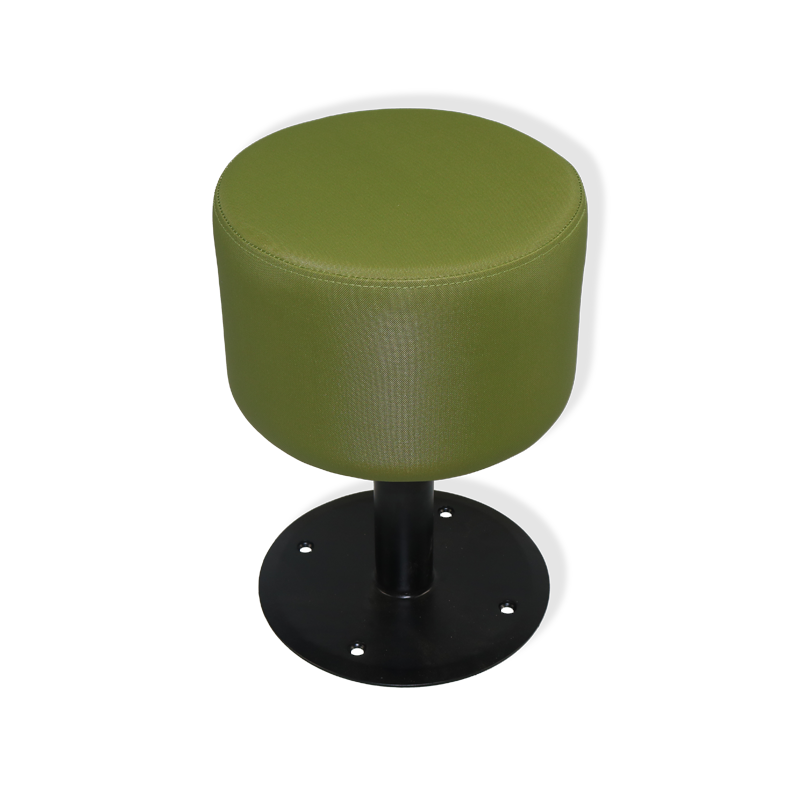
Correct sizing prevents incredibly uncomfortable dining experiences. You must calculate seat heights with absolute precision. Proper specification relies on basic spatial math. We divide these crucial dimensions into two distinct categories.
Counter Height Configurations: You need a 24 to 26 inch seat height for standard 36-inch residential-style counters.
Bar Height Configurations: You need a 30 to 32 inch seat height for traditional 42-inch commercial bars.
Patron clearance represents the most critical ergonomic metric in your venue. You must follow the strict industry rule perfectly. Always maintain 10 to 12 inches of clearance. Measure this exact distance between the top of the seat pad and the counter underside. This specific gap provides enough room for crossed legs. It prevents taller guests from bruising their knees. Comfort directly influences how long patrons stay. Longer visits usually generate much higher revenue per table.
Density and footprint planning require very careful floor mapping. Do not cram too many seats together. You will quickly frustrate your guests and your service staff. The industry rule of thumb dictates exact lateral spacing. Allocate 24 to 28 inches of bar width per stool. This generous spacing accommodates high-traffic maneuverability perfectly. It allows patrons to eat comfortably without bumping elbows. Guests can also slide out easily to use the restroom. Proper spacing prevents a crowded, claustrophobic atmosphere. Beautiful hospitality bar seating only works if patrons can actually access it.
Your venue's aesthetic clearly drives your initial material choice. However, daily operations dictate the long-term reality of your seating. You must carefully balance visual appeal against harsh maintenance needs. Let us examine the primary frame materials used today.
Steel and Aluminum: These metals work best for high-traffic environments. They deliver a sleek, modern industrial aesthetic. Aluminum offers excellent outdoor viability if powder-coated properly. It naturally resists rust, corrosion, and salty coastal air.
Hardwood: Wood offers premium warmth and traditional charm. It feels incredibly inviting and upscale. However, hardwood requires highly specific commercial lacquers. These tough finishes resist chipping from constant impacts.
Footrests endure brutal daily abuse from heavy footwear. You must specify integrated footrests on every single seat. They require durable metal kickplates for long-term survival. Patrons naturally rest their shoes on these lower rungs. Without a metal guard, boots will quickly destroy the finish. Bare wood splinters terribly, and painted metal chips away. Steel kickplates prevent this rapid degradation completely.
Floor protection often goes overlooked during the procurement phase. Scratched floors cost thousands of dollars to repair. You must require heavy-duty floor glides on all legs. Manufacturers design these small caps specifically to prevent friction damage. Replaceable nylon glides work perfectly for rough concrete or carpet. Heavy felt glides protect delicate hardwood or smooth tile surfaces. You should inspect these glides quarterly. Replace them immediately when they wear down.
Procuring furniture for a commercial space requires strategic manufacturing partnerships. Buying retail drastically limits your operational flexibility. Working directly with an OEM bar stool manufacturer changes everything. OEM stands for Original Equipment Manufacturer. These factories build your seating exactly to your specifications.
Volume and scalability represent major advantages for growing hospitality brands. Direct partnerships ensure absolute consistency across multi-location restaurant rollouts. Your seating in New York will perfectly match your seating in London. Retailers often discontinue product lines without any warning. OEM factories retain your exact engineering specifications for future orders. They guarantee brand uniformity as you aggressively expand.
Value engineering allows you to protect your architectural budgets effectively. Factory partners can easily modify existing designs to meet financial constraints. You can comfortably change a backrest pitch to reduce material costs. You might upgrade a fabric grade for high-spill dining areas. OEM teams help you optimize the product for your exact operational needs. You get custom solutions without paying exorbitant bespoke pricing. Furthermore, they allow you to order a single sample unit. You can conduct an on-site sit test before authorizing a massive purchase order.
Finally, consider the strict logistics of warranty and fulfillment. Transparent discussions about commercial warranties actively protect your investment. A reliable factory typically offers 3 to 5 years of coverage on welded frames. They strongly stand behind their engineering. You must also factor lead times into your procurement schedule. Custom commercial orders usually require 6 to 12 weeks for production and delivery. Plan your purchasing timeline around these manufacturing realities. Early engagement prevents stressful, last-minute compromises before your grand opening.
Investing in robust fixed commercial seating acts as a baseline requirement for operational efficiency. It is never an area for hasty budget-cutting. Fragile residential chairs simply cannot survive the demanding hospitality environment. Moving parts fail constantly, delicate fabrics tear quickly, and wobbly legs invite disastrous lawsuits. By choosing solid, contract-grade frames, you actively protect your venue and your guests. You eliminate constant repair cycles and guarantee an immaculate, organized aesthetic day after day.
We highly recommend taking immediate action on your upcoming hospitality projects. Procurement managers and interior designers should audit their current bar dimensions today. Verify your exact counter heights before finalizing any design concepts. Contact a trusted commercial manufacturer immediately to request detailed spec sheets. Ask them to send physical finish samples for your design boards. By conducting this thorough homework now, you ensure a flawless, comfortable, and enduring seating experience for every guest.
A: A true commercial model must hold a minimum of 300 lbs. Heavy-duty contract models can safely support up to 500 lbs. Standardized independent testing protocols, such as BIFMA, rigorously verify these exact weight capacities. You should always request these testing certificates before making a bulk purchase for your venue.
A: Yes, provided they are explicitly specified for exterior use. You must select models featuring UV-resistant powder coats to prevent sun fading. Rust-proof aluminum or heavily galvanized steel frames work best. You must also ensure the upholstery uses marine-grade vinyl to easily withstand rain, humidity, and rapid temperature fluctuations.
A: You must specify commercial-grade floor glides perfectly matched to your exact floor type. Use durable nylon glides for carpets or rough concrete. Use thick felt glides for delicate hardwoods or smooth tiles. Implement a strict quarterly inspection schedule to replace any worn glides before they deeply damage your flooring.


